Biden’s Argument for Afghanistan Withdrawal Gets Majority Support
Voters are divided over the withdrawal of U.S. troops from Afghanistan, but most agree with President Joe Biden’s explanation for the decision.

Voters are divided over the withdrawal of U.S. troops from Afghanistan, but most agree with President Joe Biden’s explanation for the decision.

President Joe Biden said last week it is time to go “door-to-door” to vaccinate people against COVID-19, but most voters disagree.

At a time when many schools are embroiled in controversy over the teaching of Critical Race Theory (CRT), voters still think it is important that kids learn traditional values in school.

Voters don’t seem very interested in whether Congress passes President Joe Biden’s infrastructure bill, and most believe Republicans will be able take back control of Congress in next year’s midterm elections.

Protesters last year made “Defund the Police” their slogan, but fewer than one in five voters think America should spend less on police, and a majority want to spend more.
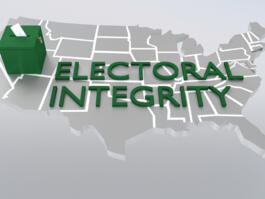
Arizona’s ongoing audit of 2020 election results has been widely criticized, but a majority of voters nationwide approve of the election integrity effort.

While sizeable numbers of both Democratic and Republican voters are discontented with their party’s leadership, Democrats are significantly more satisfied with their current leaders.

Some Republicans in Congress want to censure Rep. Ilhan Omar for comments comparing the United States to terrorist groups, and most voters reject the Minnesota Democrat’s rhetoric.
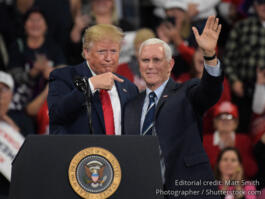
Former Vice President Mike Pence is viewed favorably by most Republican voters, but given a choice, nearly two-thirds still say their party should be more like Donald Trump.

Most voters in both major parties believe their ideological views are moving away from party leaders, but the view is more pronounced among Republican voters.

While President Joe Biden urges Congress to spend billions of dollars for new programs, most voters don’t think government spends taxpayer money wisely and want a less active role for government.

Last week’s hacker attack that shut down the Colonial Pipeline has raised concerns about the nation’s petroleum supply, and less than half of voters are confident that the federal government can protect against similar attacks in the future.

It may be that the biggest loser in last year’s election wasn’t a political candidate, but CNN, which has seen its ratings drop precipitously since former President Donald Trump left office in January.

Coca-Cola was one of the companies that publicly condemned Georgia’s new election integrity law, and the Atlanta-based soft drink bottler may pay a price for getting involved in that controversy.

Democrats in Congress last week proposed legislation to increase the number of Supreme Court justices from nine to 13, but most voters oppose the so-called “court-packing” plan.

More than half the states have made English their official language, and nearly three-quarters of Americans believe that should be the policy nationwide.
Most voters say it’s more important to prevent cheating in elections than to make it easier to vote and, by more than a two-to-one margin, they reject claims that voter ID laws are discriminatory.
After Georgia passed a new election law, Major League Baseball (MLB) decided to punish Georgia by moving the annual All-Star Game from Atlanta to Denver. Most Americans think it’s a bad idea to mix sports and politics, but a majority of Democratic voters say MLB made the right decision.

The Internal Revenue Service has extended the deadline for filing 2020 income taxes to May 17, but most Americans still plan to file by April 15 as usual. Fewer are worried about an IRS audit this year.

Major League Baseball pulled its All-Star Game from Atlanta to punish Georgia for enacting a new election integrity law, but most voters support the law and oppose calls for business boycotts against Georgia.
