Clinton, Trump Still Unpopular With Most Voters
Most voters still share unfavorable opinions of the two major party candidates for president.
Most voters still share unfavorable opinions of the two major party candidates for president.
Nearly half of voters still say their choice this presidential election will be the lesser of two evils, although Trump supporters feel that way more strongly than Clinton voters do. Fortunately for both major party candidates who have been beset with questions about their honesty and integrity, most voters put their policy positions ahead of their character.
A growing number of Republican officials are asking their party’s nominee Donald Trump to drop out of the presidential race, and one-out-of-four GOP voters think that's a good idea. Most do not, and Trump supporters overwhelmingly second that emotion.
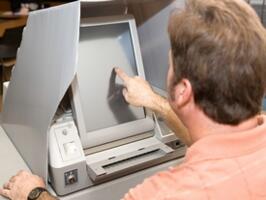
The U.S. Department of Homeland Security has confirmed hacking attempts on election systems in more than 20 states and has offered to provide states free testing of their systems before Election Day. While most voters are concerned about their state’s election system being hacked, they think state and local officials will do a better job protecting their vote than the feds will.
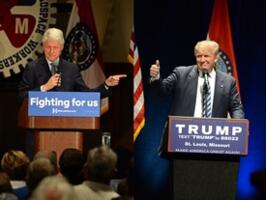
Hillary Clinton jumped on the release last week of an 11-year-old video in which Donald Trump makes graphic sexual comments to say it shows her Republican rival's demeaning attitude toward women. But Trump countered that Clinton was an enabler who allowed her husband, former President Bill Clinton, to sexually assault women for years. Voters tend to agree with Trump that Bill Clinton's behavior was worse, but not surprisingly there's a sharp partisan difference of opinion.
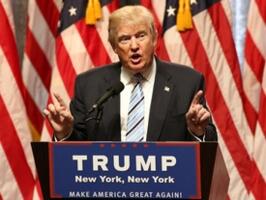
Most Republican voters still think top GOP leaders are hurting the party with their continuing criticism of Donald Trump and are only slightly more convinced that those leaders want Trump to be president.
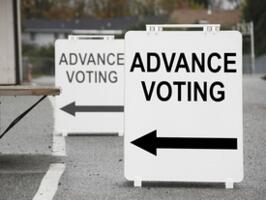
While Democrats are still more likely than other voters to say they plan to vote early this year if their state allows it, voters overall are even more likely than they’ve been in the past to say they’ll wait until Election Day to cast their vote.
Despite the media circus surrounding the presidential debates this year, voters are less likely than they’ve been in the past to say they’ve changed their vote based on the debates and that the debates are a good indicator of where the candidates stand on the issues.
A new Rasmussen Reports national telephone and online survey finds that 24% of Likely U.S. Voters say they’ve changed the way they were going to vote after watching the debates between presidential candidates. Most (70%) have not. (To see survey question wording, click here.)
(Want a free daily e-mail update ? If it's in the news, it's in our polls). Rasmussen Reports updates are also available on Twitter or Facebook.
The survey of 1,000 Likely Voters was conducted on October 6 and 9, 2016 by Rasmussen Reports. The margin of sampling error is +/- 3 percentage points with a 95% level of confidence. Field work for all Rasmussen Reports surveys is conducted by Pulse Opinion Research, LLC. See methodology.
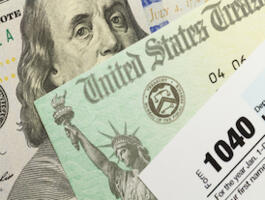
The leak of Donald Trump’s 1995 income tax returns showing substantial financial losses that appear to have allowed him to avoid paying taxes for 18 years sent the media into a frenzy last week. But most voters say such behavior is par for the course in the business world and that a candidate’s policy positions are more important than how much he or she has paid in taxes.
A new Rasmussen Reports national telephone and online survey finds that 83% of Likely U.S. Voters believe that when most businessmen pay their taxes, they try to pay as little as possible. Only 12% feel they are more concerned with paying their fair share. (To see survey question wording, click here.)
(Want a free daily e-mail update? If it's in the news, it's in our polls). Rasmussen Reports updates are also available on Twitter or Facebook.
The survey of 1,000 Likely Voters was conducted on October 4-5, 2016 by Rasmussen Reports. The margin of sampling error is +/- 3 percentage points with a 95% level of confidence. Field work for all Rasmussen Reports surveys is conducted by Pulse Opinion Research, LLC. See methodology.
[Rasmussen Reports analysts Amy Holmes and Fran Coombs are available for interested media. Please call 732-776-9777 ext. 205 for interviews.]
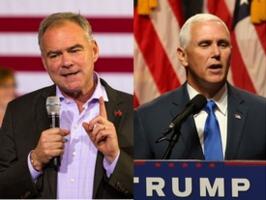
Indiana Governor Mike Pence and Tim Kaine, a U.S. senator for Virginia, are set to square off in their first and only vice presidential debate tonight. Voters are a bit more likely to say the debate is important to their vote compared to the previous election, putting it nearly even with the presidential debates in that regard.
A sizable number of Americans say they have boycotted businesses on political grounds, but how many would boycott those connected to billionaire Republican presidential nominee Donald Trump?
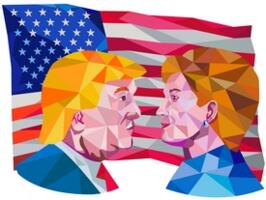
Voters still think Hillary Clinton is more fit to be president than Donald Trump.
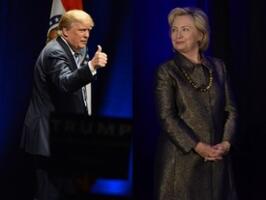
Voters think taxes and government spending will increase under a Hillary Clinton presidency but are less certain what will happen if Donald Trump is elected.
Voters are pretty convinced the moderators at the presidential debates scheduled to begin tonight will be helping Hillary Clinton more than Donald Trump.
The first televised debate between Hillary Clinton and Donald Trump is set for Monday evening, and voters - particularly those within the two major parties - place more importance on the debates this election cycle than they have in past years.
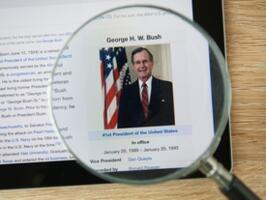
Former President George H.W. Bush who along with the rest of his family boycotted July's Republican National Convention was outed on social media this week as planning to vote for Hillary Clinton. Bush has not confirmed his vote to the media, but his reported decision has little impact on voters, especially his fellow Republicans.
Suppose the unthinkable took place, and Hillary Clinton was forced for health reasons to step down as the Democratic presidential nominee. Who do Democrats think should take her place?
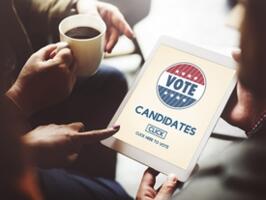
The Obama administration has expressed alarm about dangers to our election system from foreign hackers, and online voting is seen as perhaps the most vulnerable to attack. Most voters still don’t like the idea of voting via the internet and think it’s easier to corrupt than other voting methods.
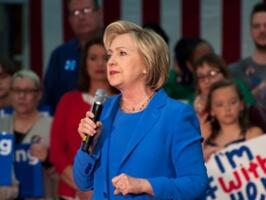
Democrats aren’t worried about Hillary Clinton’s health, but most other voters feel she may not be physically up to the job.

An overwhelming majority of voters continues to believe politicians don’t keep their campaign promises and are even more convinced it’s because they’ll say whatever it takes to get elected.
