Voters Fear More Political Violence, Blame Trump
Voters strongly believe candidates should tell it like it is, but most expect an increase in political violence this year, thanks in large part to Donald Trump’s unvarnished populist message.

Voters strongly believe candidates should tell it like it is, but most expect an increase in political violence this year, thanks in large part to Donald Trump’s unvarnished populist message.

Voters believe more strongly these days that the president of the United States is the leader of the world community and that the level of power he has is appropriate.

Canadian Prime Minister Justin Trudeau and Republican presidential hopeful Ted Cruz are the latest public officials to question whether U.S. voters are really paying attention. Americans overwhelmingly believe they know the issues when they go to the polls but agree nearly as strongly that everybody else does not.
No wonder much of the campaign rhetoric this presidential election season has focused on America’s sinking prestige in the world: Voters are now much more uncertain what the future holds for U.S. power, even as they feel more strongly than ever that America is a special place.
Issues of race are a more serious concern now for voters, but most think politicians just use them to get ahead.

Mitt Romney, the unsuccessful Republican presidential nominee in 2012, has come out swinging against Donald Trump and has even indicated he might accept the GOP nomination this year at a brokered national convention. But Romney’s endorsement doesn’t mean much to voters nor are they likely to vote for him in the fall.

Despite the continuing controversy over police shootings of black men in this country, it’s better for a political candidate to be pro-police than anti-police as far as voters are concerned.

Americans are voting in record numbers in state primaries to date, but are they donating money to their favorite candidates as well?

A proposal has been made in New York City to allow illegal immigrants to vote for mayor and other top city officials. But voters continue to strongly oppose allowing illegal immigrants to vote at all and adamantly reject a plan like the one in New York City for their hometown.
The primary race is far from over, but most voters already say a choice between the two presidential front-runners, Donald Trump and Hillary Clinton, is not one they are particularly excited about.
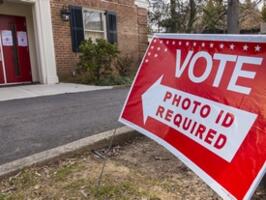
In the thick of primary season, most voters still think their fellow Americans need to prove their identity before voting, although support for such laws is down slightly from previous years.
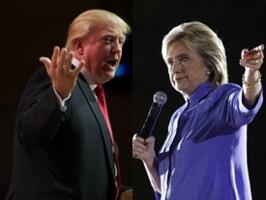
Donald Trump and Hillary Clinton may be the presidential front-runners in their respective parties, but right now there are more voters who say they will vote against them than will vote for them.

Voters in both major political parties place high importance on the next U.S. Supreme Court nomination when it comes to Election 2016, but they are predictably divided when it comes to punishing or supporting senators who refuse to consider President Obama's nominee for the latest vacancy on the court.
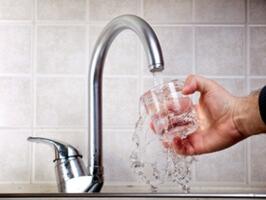
Americans overwhelmingly believe the ongoing water contamination crisis in Flint, Michigan, is primarily a state and local responsibility and think the public outcry by prominent officials like President Obama and Hillary Clinton is more about politics than a solution to the problem.


Voters strongly disagree with Pope Francis that those who support building a wall along the U.S.-Mexico border are not Christians and don't much like prominent religious leaders telling them how to vote.

Many Republican senators are proposing to delay action on President Obama's yet-to-be announced nominee to fill the U.S. Supreme Court seat vacated by the death of Justice Antonin Scalia, but most voters think the Senate has a responsibility to vote on all of the president's nominees.
A new Rasmussen Reports national telephone survey finds that 58% of Likely U.S. Voters believe every person the president nominates to serve as a judge or in a government position should receive an up or down vote on the floor of the Senate. That's up from 50% when we first asked this question in July 2013. Just 21% disagree, while another 21% are undecided.
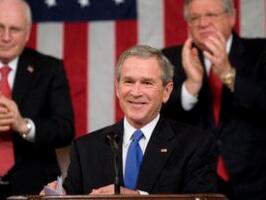
Jeb Bush is counting on an appearance by his brother, former President George W. Bush, to boost his chances in the South Carolina primary. In response, Donald Trump has stepped up his criticism of former President Bush and the Iraq war in particular. Is the last Republican president a blessing or a curse as far as voters are concerned?
The unexpected death of Supreme Court Justice Antonin Scalia has set off a political battle over who should get to nominate his replacement, but voters tend to think the choice should be President Obama's, not the next president's.
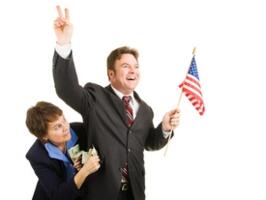
Voters feel strongly that wealthy donors and special interests and the media are too strong a presence in politics, but they remain closely divided over which is the worst problem.
