Voters Think U.S. Needs to Spend More on Defense
With Americans increasingly worried out about their safety on the home front, more voters than ever think the United States needs to spend more on national security.

With Americans increasingly worried out about their safety on the home front, more voters than ever think the United States needs to spend more on national security.

Federal authorities continue to investigate whether Hillary Clinton sent and received top secret e-mails through a private server during her time as secretary of State, and some speculate that the controversy is putting her run for the presidency at risk. But how serious a problem is it really to voters?
Yes, black lives matter, but don’t all lives matter? That seems to be the subject of some political dispute.
Few voters think America's relationship with the Muslim world is improving, but they are more confident now that Muslims around the world don't see the United States as an enemy.

Former President Jimmy Carter announced last week that he is losing his battle with cancer.

Voters feel strongly that citizens in democratic countries have a responsibility to stay informed but still doubt overwhelmingly that that's the case here in America.

Donald Trump said recently that he tries to pay as little in taxes as possible, but most Americans don’t agree and insist they want to pay their fair share. The problem is most think they already are paying more than their fair share in taxes.
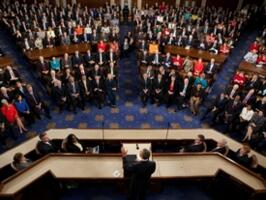
President Obama and the Republican-controlled Congress don’t agree on much, but many voters still wonder what’s really fueling the tension.

Voters may not approve of Planned Parenthood’s sale of the body organs of aborted babies, but are they ready to pull government funding from the group as a majority of U.S. senators attempted recently?

In a recent speech criticizing African political leaders who stay too long in office, President Obama said he could win a third term if he ran for president again but acknowledged that U.S. law does not allow it. Could Obama win again?

Voters can’t make it much clearer, but apparently President Obama and Congress still don’t get the message.

Even though voters don’t have much faith that the country’s best days lie ahead, most still believe America is a good place to live.
Senator Ted Cruz voiced the unhappiness of many Republican conservatives when he took to the floor of the Senate last Friday and in a rare intraparty broadside accused GOP Senate leader Mitch McConnell of lying. Veteran Republican senators quickly rallied to McConnell’s defense.

FBI Director James Comey recently announced that the radical Islamic State group (ISIS) now poses a bigger security threat to the United States than al-Qaeda does. Americans appear to agree.
Two federal inspectors general have asked the U.S. Justice Department to open an investigation into how then-Secretary of State Hillary Clinton handled sensitive information on her private e-mail account. Most voters continue to have national security concerns about Clinton’s behavior but doubt that the federal government will do anything about it.

Republican presidential hopeful Jeb Bush last week proposed cutting the number of federal employees by 10% as part of his budgetary assault on what he calls "Mount Washington." Are voters on board?

Why let the issues get in the way of a good story? That’s still the way most voters see the media’s coverage of presidential politics.

President Obama told comedian Jon Stewart earlier this week that the Internal Revenue Service didn’t target Tea Party and other conservative groups on his watch and that a lack of funding by Congress was to blame for any problems at the tax-collecting agency. But voters still think something criminal was going on and are even more suspicious of what the president knew about it.
Voters are less likely than ever to think the U.S. system of justice is fair to the majority of Americans. But race remains a big factor in how voters respond.
The Pentagon recently announced that transgender individuals will be allowed to serve openly in the U.S. military, but for voters that's a close call.
