Voters Still Question Fairness of International Courts
While a majority of voters still supports the use of international courts for certain major crimes, they put far more trust in U.S. courts to reach impartial verdicts.

While a majority of voters still supports the use of international courts for certain major crimes, they put far more trust in U.S. courts to reach impartial verdicts.
A bipartisan bill now before Congress would allow families victimized by the September 11, 2001 terror attacks to sue the Saudi Arabian government if it can be shown to have ties to the killers, but opponents including the Obama White House worry that the legislation will have negative foreign policy repercussions for the United States. Most Americans support the families right to sue.
Americans doubt they’ve been told all the facts about the September 11, 2001 terrorist attacks on the United States and strongly believe the government should come clean.

With increasing concern about the threat of terrorism here and abroad, voters are placing more importance on the war in Afghanistan, now in its 14th year, although less than half favor keeping U.S. troops there another year.
Voters remain more conservative on money issues than on those that pertain to social matters, but attitudes really haven’t changed much in recent years. Democrats and Republicans continue to disagree.
For all of the talk about Donald Trump and Bernie Sanders potentially running as third-party candidates in this year’s presidential election, most voters aren’t betting on a third-party candidate taking the White House anytime soon.
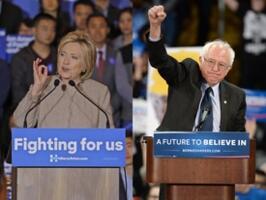
Vermont Senator Bernie Sanders has been on a hot streak lately in the Democratic primary race, but Democratic voters still put more trust in his rival when it comes to key issues.
Mississippi and North Carolina are the latest states to adopt laws that allow a private business not to serve someone if it violates the business owner's religious beliefs, but critics contend that gay, lesbian and transgender customers will suffer. Most voters nationwide agree and still don’t want their state to adopt such laws.

Voters are more critical of the presidential primary process than they have been in the past.

While Republican Party leaders talk increasingly of a brokered convention, just over half of GOP voters think their presidential nominee should be the candidate who arrives at the convention with the most delegates.

Republican presidential front-runner Donald Trump recently referred to the North Atlantic Treaty Organization (NATO) as “obsolete” and questioned why U.S. taxpayers should still be paying heavily to defend Europe and South Korea. But most voters think those long-standing arrangements are just fine.

The presidential primary process to choose the Democratic nominee includes the use of superdelegates, individuals selected by the party who can support any candidate at the party's convention regardless of who wins their state's popular vote. But just over half of Democrats cry foul at the system.

Despite the continuing anger over the policies of the federal government, another Civil War does not appear to be in the making.

Like they have for years, most voters want Congress to stop spending so much money, but they don’t actually believe it’s going to happen.

Donald Trump has run afoul of the Republican establishment with his opposition to so-called "nation-building," but most voters think Trump's on the right track.
Following the horrific bombings of an airport and metro station in Brussels earlier this week, a sizable number of Americans say they’ll be avoiding European travel in the near future and most expect a similar attack to happen on U.S. soil.

Television still reigns supreme when it comes to where voters turn for their political news, but the media get mixed reviews for their coverage of the 2016 presidential campaign so far.
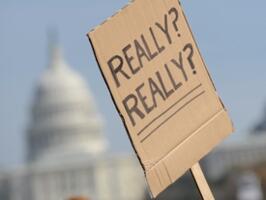
No wonder Donald Trump and Ted Cruz are winning the Republican primaries: GOP voters are more fed up than ever with their elected representatives in Washington, D.C.
Even before what appears to be the latest major terrorist attack, this time in Brussels, more U.S. voters than ever have expressed concern about the U.S. government's vigilance on the home front.

Voters see government corruption as a big problem, getting bigger the higher up in government it gets.
