Most See U.S. Foreign Aid As A Bad Deal for America
Most voters think the U.S. government gives away too much in foreign aid and that taxpayers aren’t getting their money’s worth.

Most voters think the U.S. government gives away too much in foreign aid and that taxpayers aren’t getting their money’s worth.

Voters have more confidence that Republicans know where they are going.

Arnold Schwarzenegger has refuted reports that he is considering a run for the U.S. Senate, and voters are glad to hear it.

The newest wave of disclosures from the Julian Assange-fronted WikiLeaks shows the sophisticated level of spying the CIA is now capable of, and voters wish they didn’t know.

Surprise, surprise: voters don’t think they see eye-to-eye with politicians over of how much power and money the government should have.

Voters have long been fans of smaller government and less spending. But Republicans continue to be defensive about cuts in military funding, while Democrats remain loyal to entitlements.
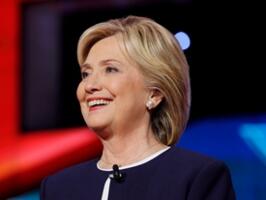
Rumors have been circulating for weeks that Hillary Clinton is eyeing a New York City mayoral run, and the recent appearance of “Hillary for Mayor” signs around the city has added fuel to the fire.
But 58% of Likely U.S. Voters don’t want to see the failed 2016 Democratic presidential candidate run for mayor of New York City. A new Rasmussen Reports national telephone and online survey finds that just 23% think Clinton should seek the mayoralty, while 19% are not sure. (To see survey question wording, click here.)

Most voters continue to expect significant government spending cuts over the next few years and agree that any new spending must be offset by budget cuts elsewhere.

President Trump laid out his agenda in a generally well-received speech Tuesday night to Congress, but most voters don’t want Congress to rush to pass what the president has proposed.
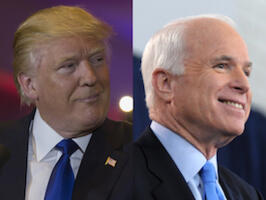
Republican Senator John McCain has been one of President Trump’s most vocal critics, but the majority of GOP voters aren’t listening. Most Democrats, on the other hand, like what McCain has to say.

Despite Puerto Rico’s ongoing fiscal issues, a sizable number of Americans support making the longtime U.S. commonwealth an official state. There remains far less support for granting statehood to Washington, D.C.

Nearly one-third of all Americans – and even more Republicans - believe the United States would be better off or not impacted if California went its own way and became a separate country.
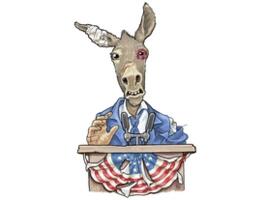
Most voters agree that it’s bad for America and bad for the Democratic Party if Democrats continue to flat out oppose everything President Trump does. Even Democrats are conflicted about their party’s scorched earth policy.

Just weeks into the new Congress, Republicans are a lot less critical of their congressional representatives, while Democrats are less enthusiastic about theirs.

Critical of the press coverage he has been getting, President Trump has called some in the media "enemies of the people." Most Republicans remain angry at the media and strongly support calling out specific members of the press by name, while Democrats and unaffiliated voters are far less critical of the media than they've been in the past.
Voters are a lot less critical of news organizations that publish top secret government information.

Following numerous leaks of secret information intended to embarrass President Trump to the news media, most voters think the leakers should be punished.

President Trump has talked about a major federal plan to rebuild America’s infrastructure, and Democrats are receptive. Americans aren’t overly concerned about infrastructure problems, though, and see them primarily as a state responsibility.

President Trump's belief that radical Islamic terrorism is a threat to America is one of the primary reasons behind his temporary freeze on refugees and visas. Most voters continue to recognize that threat and believe the United States is still at war with radical Islam.

Hillary Clinton recently declared that "the future is female," and nearly half of voters - regardless of gender - agree there will be more women leaders in the near future. But younger voters are more convinced of this than their elders.
