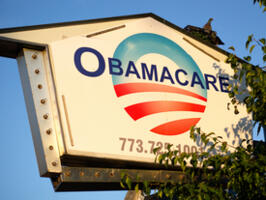
Just over half of U.S. voters continue to view President Obama’s health care law unfavorably, and most remain adamant that consumers should have choices when it comes to how much health care coverage they want to pay for. A new Rasmussen Reports national telephone survey finds that 43% of Likely U.S. Voters have at least a somewhat favorable opinion of the health care law, while 51% view it unfavorably. This includes 18% who view the law Very Favorably and 38% with a Very Unfavorable opinion of it. (To see survey question wording, click here.)
(Want a free daily e-mail update? If it's in the news, it's in our polls). Rasmussen Reports updates are also available on Twitter or Facebook.
The survey of 1,000 Likely Voters was conducted on May 17-18, 2013 by Rasmussen Reports. The margin of sampling error is +/- 3 percentage points with a 95% level of confidence. Field work for all Rasmussen Reports surveys is conducted by Pulse Opinion Research, LLC. See methodology.
Voters have consistently said for years that cost is their biggest health care concern, and most still believe the free market, not government control, is the best way to keep those costs down. A new Rasmussen Reports national telephone survey finds that 59% of Likely U.S. Voters think free market competition would do more to reduce health care costs than more government regulation. Only 23% disagree and believe more government intervention in the health care market is the better way to go. Eighteen percent (18%) are not sure. (To see survey question wording, click here.)
(Want a free daily e-mail update? If it's in the news, it's in our polls). Rasmussen Reports updates are also available on Twitter or Facebook.
The survey of 1,000 Likely Voters was conducted on April 27-28, 2013 by Rasmussen Reports. The margin of sampling error is +/- 3 percentage points with a 95% level of confidence. Field work for all Rasmussen Reports surveys is conducted by Pulse Opinion Research, LLC. See methodology.
Nearly half of voters nationwide continue to oppose a health care system in which the government provides coverage for everyone, but there is predictable partisan disagreement.
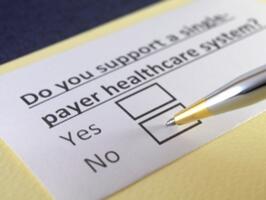
A new Rasmussen Reports national telephone survey finds that 38% of Likely Voters favor a single-payer health care system, while 46% oppose such a system. Another 16% are not sure. (To see survey question wording, click here.)
(Want a free daily e-mail update? If it's in the news, it's in our polls). Rasmussen Reports updates are also available on Twitter or Facebook.
The national survey of 1,000 Likely Voters was conducted on March 16-17, 2012 by Rasmussen Reports. The margin of sampling error is +/- 3 percentage points with a 95% level of confidence. Field work for all Rasmussen Reports surveys is conducted by Pulse Opinion Research, LLC. See methodology.
Voters are less certain that Medicare costs can be reduced without hurting the quality of care, but most are not confident that they will get their full promised benefits anyway. A new Rasmussen Reports national telephone survey finds that 50% of Likely U.S. Voters think it is possible to reduce the cost of Medicare without hurting the quality of health care for senior citizens. Twenty-four percent (24%) disagree, while just as many (26%) are not sure. (To see survey question wording, click here.)
(Want a free daily e-mail update? If it's in the news, it's in our polls). Rasmussen Reports updates are also available on Twitter or Facebook.
The survey of 1,000 Likely Voters was conducted on February 20-21, 2013 by Rasmussen Reports. The margin of sampling error is +/- 3 percentage points with a 95% level of confidence. Field work for all Rasmussen Reports surveys is conducted by Pulse Opinion Research, LLC. See methodology.
Voters are now almost evenly divided over the establishment of a single-payer health care system under which the federal government provides coverage for everyone.
Forty percent (40%) of Likely U.S. Voters favor a single-payer system, according to a new Rasmussen Reports national telephone survey. Forty-four percent (44%) oppose the creation of such a system. Sixteen percent (16%) are undecided. (To see survey question wording, click here.)
Win an IPad: Take the Rasmussen Challenge.
(Want a free daily e-mail update ? If it's in the news, it's in our polls). Rasmussen Reports updates are also available on Twitter or Facebook.
The survey of 1,000 Likely Voters was conducted on December 10-11, 2012 by Rasmussen Reports. The margin of sampling error is +/- 3 percentage points with a 95% level of confidence. Field work for all Rasmussen Reports surveys is conducted by Pulse Opinion Research, LLC. See methodology.
Nearly half of all voters want their state to set up its own health care exchange to help implement President Obama’s national health care law. Roughly half the states, however, have already chosen not to do so. In those states, voters are evenly divided.
The latest Rasmussen Reports national telephone survey finds that 46% of Likely U.S. Voters want their governor to support the implementation of the health care law in their state. But nearly as many (42%) want their governor to oppose the law’s implementation. Twelve percent (12%) are undecided. (To see survey question wording, click here.)
(Want a free daily e-mail update? If it's in the news, it's in our polls). Rasmussen Reports updates are also available on Twitter or Facebook.
The survey of 1,000 Likely Voters was conducted on December 10-11, 2012 by Rasmussen Reports. The margin of sampling error is +/- 3 percentage points with a 95% level of confidence. Field work for all Rasmussen Reports surveys is conducted by Pulse Opinion Research, LLC. See methodology.
Voters are narrowly divided in their views of President Obama’s national health care law, but a sizable majority thinks the law is likely to cost taxpayers more than has been officially estimated.
The latest Rasmussen Reports national telephone survey shows that 46% of Likely U.S. Voters have a favorable impression of the health care law, while 49% view it unfavorably. This includes 16% with a Very Favorable opinion and 35% with a Very Unfavorable one. (To see survey question wording, click here.)
(Want a free daily e-mail update? If it's in the news, it's in our polls). Rasmussen Reports updates are also available on Twitter or Facebook.
The survey of 1,000 Likely Voters was conducted on December 10-11, 2012 by Rasmussen Reports. The margin of sampling error is +/- 3 percentage points with a 95% level of confidence. Field work for all Rasmussen Reports surveys is conducted by Pulse Opinion Research, LLC. See methodology.
Voters are narrowly supportive of allowing businesses and religious organizations to opt out of government-mandated free birth control for their women employees if religious beliefs are at stake. As part of the new national health care law, the Obama administration has mandated that all companies must have health insurance coverage that provides no-cost contraceptives for women. A new Rasmussen Reports national telephone survey finds that 46% of Likely U.S. Voters feel that if providing such coverage violates the deeply held beliefs of a church, religious organization or business owner, they should be allowed to opt out of providing coverage for contraceptives.
But nearly as many voters (41%) disagree and oppose anyone being allowed to opt out for religious reasons. Twelve percent (12%) are undecided. (To see survey question wording, click here.)
( Want a free daily e-mail update? If it's in the news, it's in our polls). Rasmussen Reports updates are also available on Twitter or Facebook.
The survey of 1,000 Likely Voters was conducted on December 2-3, 2012 by Rasmussen Reports. The margin of sampling error is +/- 3 percentage points with a 95% level of confidence. Field work for all Rasmussen Reports surveys is conducted by Pulse Opinion Research, LLC. See methodology.
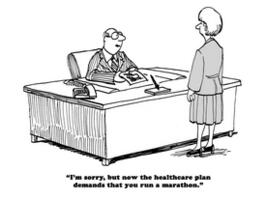
Voters tend to agree with the federal government setting standards for health insurance coverage but think individuals should have the right to choose reduced coverage if it saves them money. The latest Rasmussen Reports national telephone survey finds that 39% of Likely U.S. Voters think the government should require every health insurance company and health insurance plan to cover the exact same set of medical procedures. Thirty-two percent (32%) disagree and oppose such a mandate. Twenty-nine percent (29%) are not sure. (To see survey question wording, click here.)
Win an IPad: Take the Rasmussen Challenge.
The survey of 1,000 Likely Voters was conducted on December 2-3, 2012 by Rasmussen Reports. The margin of sampling error is +/- 3 percentage points with a 95% level of confidence. Field work for all Rasmussen Reports surveys is conducted by Pulse Opinion Research, LLC. See methodology.
While a sizable number of U.S. voters believe today’s health care system is in good shape, half expect it to get worse in the coming years. The partisan differences on the issue are significant.
A new Rasmussen Reports national telephone survey finds that 43% of Likely Voters rate the U.S. health care system as good or excellent, including just nine percent (9%) who give it an excellent rating. Nineteen percent (19%) rate the current health care system as poor. (To see survey question wording, click here.)
(Want a free daily e-mail update ? If it's in the news, it's in our polls). Rasmussen Reports updates are also available on Twitter or Facebook.
The survey of 1,000 Likely Voters was conducted on November 25, 2012 by Rasmussen Reports. The margin of sampling error is +/- 3 percentage point with a 95% level of confidence. Field work for all Rasmussen Reports surveys is conducted by Pulse Opinion Research, LLC. See methodology.