2016 Will Not Feature Christie vs. Clinton By Scott Rasmussen
One of the sure signs that political activists have too much time on their hands is all the chatter about who will win the 2016 presidential nominations.
One of the sure signs that political activists have too much time on their hands is all the chatter about who will win the 2016 presidential nominations.

It's no secret that both political parties are struggling to connect with voters. Strategists dream up marketing plans to increase their party's appeal to this constituency or that group. Sometimes they work, and sometimes they don't. But they never establish a deep and lasting connection with voters.
That's because most of what the parties talk about is yesterday's news and is largely irrelevant to the realities of the 21st century.

Sixty-four percent of Americans say that it's possible to have an honest discussion about race in America. I would like to believe that, but I am skeptical.

As Americans, we tend to believe we have the right to do whatever we want, so long as it doesn't interfere with the rights of others. But sometimes the lines get a little blurry.

Our nation's 237th birthday is being celebrated in many ways that have become familiar over the years. Fifteen percent of Americans will watch a parade; 29 percent will sing patriotic songs; 63 percent will enjoy a cookout with family and friends; 78 percent are likely to see fireworks.

On Dec. 1, 1955, a churchgoing woman of character refused to give up her seat on a bus in Montgomery, Ala. Many credit Rosa Parks' courageous action that day with launching the civil rights movement. While I have great respect for what Ms. Parks did that day, however, she did not start the civil rights movement. The movement began long before, and public opinion led the way.
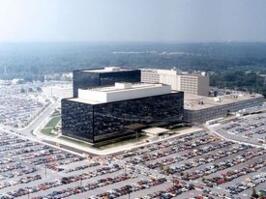
While recognizing that it's important to fight terrorism with all of the tools at our disposal, the American people are having a hard time finding good guys in the story about the National Security Agency's surveillance program.
Government officials from the president on down have defended the program and claim it has prevented several terrorist attacks. However, questions have been raised about some of those claims, and just 35 percent of Americans believe the officials are telling the truth. A larger number (45 percent) believe they are just trying to justify the surveillance program now that it's been made public.

Another week, another controversy in official Washington. While each of these stories has its own cast of characters and internal dynamics, it is now possible to identify a unifying theme.

Many pundits assumed that this would be the year that comprehensive immigration reform became law. The conventional wisdom was that President Obama's re-election and his strong showing among Hispanic voters would force Republicans to go along.
Now, halfway through the year, the prospects for immigration reform have dimmed significantly.

Most stories about the president's health care law these days are about the challenges of implementation and the complexity of setting up exchanges. But that's not where the action is. What's more important is that insurance companies, benefits consultants and others are actually reading the 2,000-page law to see what it says.
This isn't just a case of people believing politicians always behave this way. Only 19 percent think the IRS usually targets political opponents of the president.
Skepticism is so high that few are convinced the IRS acted alone. Sixty percent believe that other federal agencies also were used to target the tea party and other conservative groups. Ominously for Democrats, two out of three unaffiliated voters share that view.
So, why hasn't it hurt the president's overall job approval? Some believe it has. The theory is that with a recovering economy, his ratings should be higher. Another possibility is that the president's base may have doubts, but they are still sticking by their man.
It's impossible to predict the lasting impact of the controversies now besetting the Obama administration, but the risks to the president's agenda are sizable.

Foreign policy matters rarely top the list of voter concerns. That's especially true in times of challenging economic news. In recent weeks, though, national security topics have been working their way into the headlines. First came the Boston Marathon bombings and questions about terrorist connections. The civil war in Syria entered the news with reports of chemical warfare followed by an Israeli bombing near Damascus. Finally, congressional hearings have provided additional details about what happened in Benghazi, Libya, on the day Ambassador Christopher Stevens and other Americans were murdered during a terrorist attack.
There are many ways to describe the enormous gap between the American people and their elected politicians. Most in official Washington tend to think that their elite community is smarter and better than the rest of us. Many hold a condescending view of voters and suggest that the general public is too ignorant to be treated seriously. Only 5 percent of the nation's voters, however, believe that Congress and its staff members represent the nation's best and brightest.
The news from Boston over the past couple of weeks has been the stuff of nightmares. Homemade bombs killing and injuring innocent people at a high-profile public event were followed by a massive manhunt. People in the surrounding suburbs were ordered to stay inside, businesses closed, and SWAT teams overwhelmed a typically quiet community. The Boston police commissioner warned everyone: "We believe this is a terrorist. We believe this is a man that's come here to kill people."
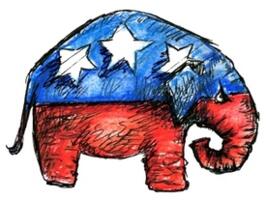
Mitt Romney's secretly recorded comment that 47 percent of Americans are "dependent on the government" and "believe they are victims" isn't the only reason he lost the presidential campaign. But the candidate himself acknowledged after the election that the comments were "very harmful."
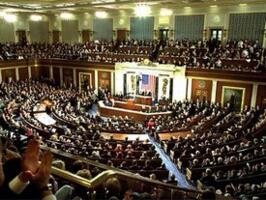
Gun control advocates sound puzzled by congressional resistance to relatively modest gun control legislation.

There's a strong desire among many Americans today to address a growing problem of income inequality. That desire helped President Obama raise taxes on upper-income Americans a few months ago. It's reflected in the fact that just 35 percent believe the U.S. economy is fair to the middle class, and only 41 percent believe it's fair to those willing to work hard. Still, it's not really the inequality that bothers people. After all, 65 percent believe that it's fair for those who create very successful companies to become very rich. The problem comes when some people earn big bucks simply because they can game the system in ways that aren't available to most Americans.

Sixty-eight percent of voters believe that, when done legally, immigration is good for America. Most voters for years have favored a welcoming policy of immigration. Unlike many issues these days, there is virtually no partisan disagreement.
These facts raise a question that should make everyone in official Washington uncomfortable. If immigration is good for America and there is support across party lines, why can't the politicians figure out a way to come up with something that works?

Americans have a healthy respect for free market competition and are resistant to government interference -- even when they don't like what the market is up to. For example, 69 percent of Americans believe that large corporate executives are overpaid, but only 17 percent want the government to regulate their pay.
